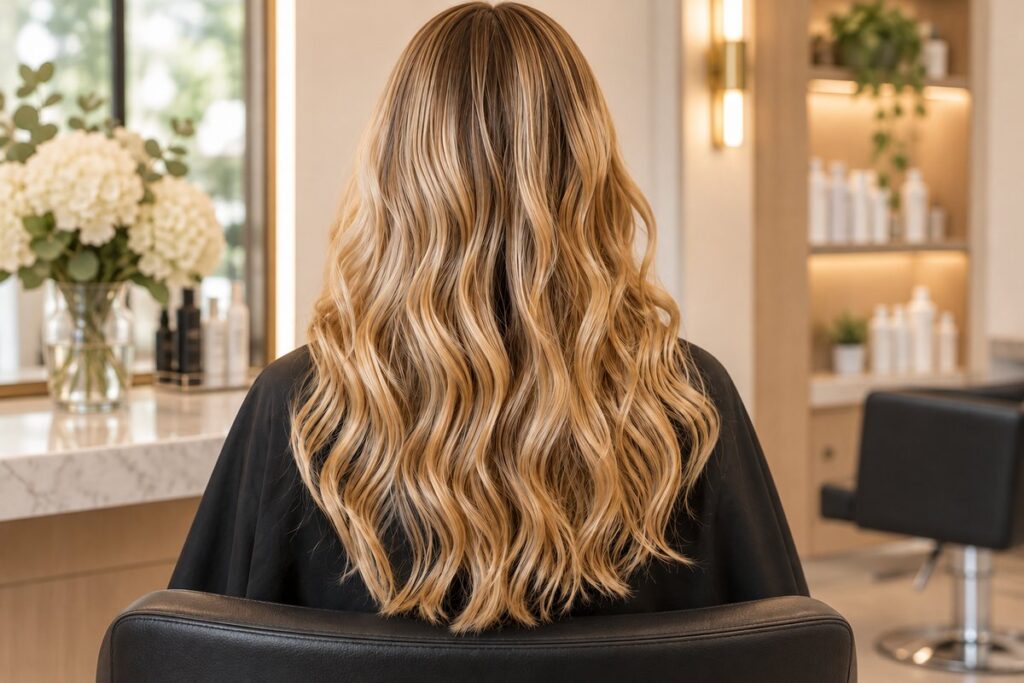
Choosing Between Color Care and Extensions After GLP-1 Hair Loss in Rocklin
Considering blonding, root touch-ups, gloss, or extensions for thinning hair after GLP-1 weight loss? Here’s how Rocklin women can decide what’s best.
Understanding Hair Care Needs After GLP-1 Hair Loss
Many women in Rocklin have begun to notice thinning hair or extra shedding after using GLP-1 weight loss treatments, welcoming a new baby, or weathering a stressful season. Hair loss after weight loss is often temporary, but it can feel frustrating and visible, especially in the months before regrowth catches up. The right approach can help bridge the gap—without risking more stress on fragile hair or making color and styling decisions you regret later.
Choosing between full blonding, a subtle root retouch, a gloss, or adding sewn-in weft extensions depends on your hair’s current condition, color goals, and how comfortable you are with maintenance. Understanding the strengths and purpose of each service, as offered by Lincoln Blonde Specialist in her calm Lincoln studio, is the first step toward feeling your best while your hair recovers. This guide compares each option for women in Rocklin, whether your hair is blonde, brunette, red, black, gray, or a mix—and however it’s textured.
Remember, advanced color care and extensions can be planned for all shades and textures. If you are noticing patchy loss, shed for more than six months, or have scalp symptoms, check with your prescriber or a dermatologist. Any cosmetic change here is just that: a bridge, not a cure.
The Full Blonding Experience: Transformative But Demanding
Full blonding treatments can offer dramatic lightening and brightness throughout your hair. For some, this matches their natural regrowth, corrects uneven faded color, or offers a big mood lift, especially in transition seasons. If your hair is already used to color and isn’t especially fragile, this can be a transformative option. Yet after rapid weight loss or postpartum, hair is often weaker and may not respond well to intense lightening.
Gentlety is vital. Full blonding exposes any breakage or thinning, and needs careful planning if you’ve shed more than usual. At the service menu, you’ll find approaches designed to minimize stress, like bond-building formulas and low-ammonia options, but it’s still more of a commitment on fragile scalps than softer refresh techniques. Full blonding is usually best for healthy, resilient hair or when addressing old banding that needs to go, not when your hair is its most delicate.
A thorough consultation is crucial, especially if your hair feels weaker at the root or you have areas of thinning. For many, a lighter approach delivers a better outcome—and less regret if shedding continues for a while.
Subtle Color Solutions: Root Retouch and Gloss
For Rocklin women experiencing ongoing hair loss after weight changes or a demanding year, a root retouch or gloss often makes a gentler, more practical option. A root retouch subtly blends new growth to your existing shade, minimizing lines but using less developer and lightener than a full blonding process. This is especially helpful for those whose grays are peeking more than usual or for keeping a lived-in, blended look.
Glossing is even more delicate—a treatment that refreshes tone, brings out natural shine, and blurs demarcation. It can be used on its own or after any lightening service, and is suitable for all hair colors and textures, not just blondes. Glosses help keep hair cuticles smooth, which in turn makes fine, fragile hair look fuller and more reflective as light hits it.
Both root retouches and gloss services use gentle color blends and can be maintained between more major visits. They’re often recommended alongside extension care for clients wearing wefts, as they don’t disrupt the integrity of beads or tracks sewn close to the scalp.
Beaded Weft Extensions: A Bridge Back To Fullness
If your shedding has revealed more scalp than you’re used to, or you miss the density of your old ponytail, Genius Weft extensions—in particular, those sewn onto rows of soft beads—can make a gentle but noticeable difference. These installations never use glue, heat, or tape: the weft is supported by your own hair in a row, keeping weight minimal and tension spread evenly. For anyone with enough healthy hair to anchor the beads, it’s the most natural and damage-limiting approach to adding fullness while your own hair regrows.
Extensions today are color-matched expertly for every shade, from dark brunette to strawberry red, silver, soft black, and blended tones. Sarah, the extension expert at the studio, plans each application for texture—whether your hair is fine and straight or thick and curly. The ultimate goal is to add the appearance of density and softness, not just length. Move-ups are done as your own hair grows, ensuring the install stays light and secure.
Sewn-in wefts do not help with underlying hair loss causes, but offer a cosmetic confidence boost while growth takes its time. The key is a careful consultation: heavy shedding may mean waiting, as there must be enough sturdy hair to place and support the beads. Traction alopecia from too much weight or tension is a real concern, so installs are purposefully lighter for those with recent thinning.
Adding Volume vs Adding Length: Which Is Best For You?
One of the most common questions from Rocklin clients is whether they should add just fullness or go for more dramatic length with extensions. Both have their place, but considering your routine is key. For those who’ve lost density but still have some length, adding volume alone is usually the most natural-looking and comfortable. Fewer wefts are needed, and the overall feel is lighter—important when your own hair is already fragile.
If you’re craving both a boost in thickness and longer hair, sewn-in wefts can do both, but require regular move-ups and home care. Thin, delicate hair often holds volume better than extra length; adding too much weight can risk more shedding if not planned carefully. Choose length only when your hair feels strong enough to handle it, and discuss options with your stylist to keep installs safe and light.
Sarah customizes both options for every client at the Lincoln salon, planning the method based on your natural texture and goals. Thick or wavy hair, for example, may integrate more seamlessly with additional wefts than very fine, straight strands. The final look should always blend perfectly with your own shade and pattern.
Caring For Fragile Hair: Products and Maintenance
Post-weight loss, postpartum, or stress, hair is often most vulnerable to breakage. Routine care with the right products makes all the difference. The salon uses only R+Co, BLEU, and K18 products, chosen for their gentle but effective formulas. These help maintain both colored and extended hair without additional tension or dryness. K18 and bond-building treatments are especially useful for those wanting to keep their remaining hair strong while exploring color or weft services.
A key part of hair recovery is maintaining consistent, low-stress home care between salon visits. Following a detailed extension care routine—such as the extension care guide—protects your investment and minimizes tangling, matting, or unnecessary strain at the roots. This holds true even if you skip extensions and focus on gentle color transitions, as over-brushing or harsh home treatments can lead to more shedding.
Regular, honest check-ins with your stylist allow for tweaks in the routine if shedding increases or your goals shift. Remember, no hair product or salon visit can guarantee regrowth or stop shedding that is medically related—only caring, gentle handling can support a smoother journey back to fullness.
Choosing Your Service: Which Path Fits You Best?
- Full Blonding: Best for those with stable hair health looking for a prominent change. Not recommended during heavy shedding.
- Root Retouch or Gloss: Ideal for maintaining color and tone during fragile times, with minimal disruption to roots and length.
- Sewn-in Weft Extensions: Perfect for filling in where density has dropped, or bridging until natural growth resumes—safe only when enough sturdy hair remains.
- Volume vs. Length: Choose volume for comfort on delicate hair; opt for added length if hair is strong and you seek a bigger transformation.
All services are customized for each client’s color, shade, and texture. Sarah’s approach always starts with a tailored consultation, as described here, and never pressures anyone into a service that might put fragile hair at risk.
FAQ: Color Care and Hair Extensions After GLP-1 Hair Loss
Can I color my hair the same way after thinning due to GLP-1?
After thinning or increased shedding, many find their usual color routine too harsh. Softer root retouching or glossing is often safer until hair feels strong again. Work with a stylist skilled in gentle methods to protect and blend fragile new growth without unnecessary stress at the scalp.
Are sewn-in weft extensions safe during active shedding?
Sewn-in extensions require enough healthy strands to anchor the beads securely; heavy or active shedding may mean waiting until your hair is stable. The stylist will always assess your scalp and suggest the safest timing and placement so you avoid further stress or traction.
Do extensions work for all hair shades and textures?
Yes! Genius Weft extensions are expertly matched for every hair color and type—from soft blonde and jet black to natural red, gray, or complex blends. Texture-matching ensures natural integration for fine, thick, straight, or curly hair, so you can wear your hair your way during the regrowth phase.
Book With Confidence
Feeling overwhelmed by choices is natural, especially when your hair feels not quite like your own. Whether you need gentle color maintenance, a full change, or a custom plan for filling in fullness, Rocklin clients are welcomed for a personal, caring consultation. Start by exploring your options with Sarah—see her background and approach on the about page, or Book with Sarah for a no-pressure, honest conversation about your next step.