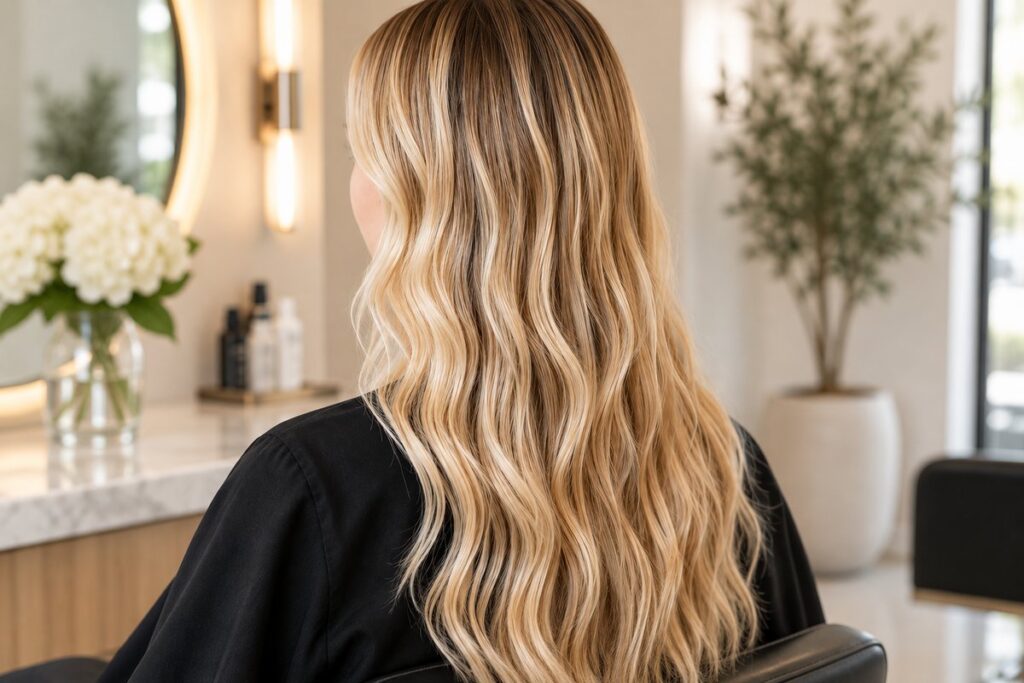
A Practical Guide to Extensions & Blonding After Hair Loss in Lincoln, CA
Discover how women of every hair color and texture near Lincoln, CA can prepare for and care for sewn-in weft extensions or gentle blonding after thinning hair, GLP-1 weight loss, or postpartum shedding. This guide covers appointments, maintenance, gentle color, and at-home care for full, natural-looking hair while regrowth happens.
Understanding Extensions & Blonding After Hair Loss
If you’re noticing thinner hair or more shedding after GLP-1 weight loss, the arrival of a baby, or a stressful year, you’re not alone. Many women in Lincoln, CA and surrounding towns experience hair changes—no matter if their natural shade is blonde, brunette, red, black, gray, or beautifully mixed. While it’s normal to want fuller-looking hair as it grows back, it’s important to approach extensions and blonding with extra care, especially when hair is delicate.
Extensions, like Genius Weft human-hair wefts sewn onto small beads, offer a cosmetic bridge while natural hair recovers. Gentle color services, including softer regrowth, careful toners, and glosses, help blend extensions and support fragile strands without stressing the scalp. This guide offers clear, practical steps to get the best results and keep your hair healthy—whether you’re looking for subtle fullness or a bold refresh.
Remember, extensions do not treat hair loss. If you see patchy shedding, notice symptoms with hair loss, or if thinning continues for over six months, consult a dermatologist or prescriber. The guidance here is for supportive cosmetic options only, never medical advice.
Preparing for Your Consultation in Lincoln, CA
Before you schedule your appointment for blonding or beaded weft extensions, plan for an in-depth consultation. This is your chance to discuss your recent hair history, changes in texture, or specific concerns after weight loss or postpartum. Bring any hair products you use and, if possible, photos of your natural color and texture before thinning began. This helps your stylist, like Sarah at her welcoming Lincoln studio, recommend gentle, appropriate options customized to your needs.
Be honest about how much your hair is shedding—extensions require enough healthy hair for the beads to anchor securely and safely. If heavy shedding is still ongoing, your stylist may suggest waiting so there’s no risk of extra tension or damage. Ask about maintenance timing, and how your specific hair type (fine, thick, straight, wavy, or curly) may affect extension placement and color choices.
Scheduling can be easier if you check local events beforehand. The Community Events Calendar is a helpful resource to avoid busy times in Lincoln, especially for longer appointments or if you need to arrange childcare in advance. For a preview of services offered and what to expect, visit the services page.
Coloring and Installing Extensions on Fragile Hair
Recent hair loss from reasons like GLP-1 medication, new motherhood, or stress calls for extremely gentle color techniques. When planning for highlights, root touch-ups, or any blonding, lightness should be subtle and done with the overall health of your hair in mind. Soft regrowth blends, toners, and glosses are preferred over frequent intense bleaching or chemical services. This way, your natural hair—blonde, brunette, or any shade—can keep its strength while extensions fill in for volume and length.
Extensions are installed using the Genius Weft method, which means hand-sewn wefts of human hair are sewn onto a row of beads, right near the scalp, without glue, tape, or heat. This reduces the risk of traction alopecia and keeps the scalp feeling light and healthy. Your stylist will always check that your hair can support the beads without excess tension, and will choose the weft color and texture that blends perfectly with yours—whether you’re curly, wavy, or stick-straight.
Only use salon-approved products like R+Co, BLEU, and K18—which are safe for extensions and can support fragile hair during the regrowth period. For more on Sarah’s approach to gentle application, read her story on the About Sarah page.
Maintenance Timing: Move-Ups and Color Touch-Ups
Sticking to a regular maintenance schedule is key for keeping both your own hair and your extensions looking their best. Move-ups (where the stylist repositions the weft and beads as your natural hair grows) need to be planned every several weeks, tailored to your hair’s growth and overall health. Extensions that are left too long between appointments can stress or tangle natural strands, so booking ahead—especially near seasonal community events found on the Lincoln events calendar—helps you stay on track.
Maintenance visits can also include gentle color, like toners or root softening, which keep regrowth natural and blend the extensions seamlessly. Your stylist will always choose the least damaging approach for your hair shade and texture, whether you’re aiming for bright highlights or a sun-kissed brunette.
It’s common for women experiencing hair loss after rapid weight loss or postpartum to need some adjustments as their own hair comes back in. A flexible, ongoing maintenance plan ensures your extensions support your journey, from thinning to growing fuller and stronger again.
At-Home Care: Washing, Products, and Gentle Handling
Consistent at-home care makes a big difference in the longevity and appearance of your extensions and natural hair. Washing should be gentle—avoid rubbing or matting near the beads. Always brush your hair from tips upward with a soft-bristled brush, working in small sections to prevent tangling. Limit washing to two or three times a week, unless your scalp truly needs it, and focus on massaging only the scalp gently while letting conditioner flow over the mids and ends.
Stick with recommended products that are safe for both wefts and fragile hair. The only approved lines are R+Co, BLEU, and K18, which offer bond-building and moisturizing formulas to protect against breakage and dryness. Heavy oils, drugstore shampoos full of sulfates, or silicone-heavy products can weigh down extensions—so keep to the care plan detailed in the extension care guide.
Sleeping in a loose braid or low ponytail prevents matting during the night. Always let your hair air-dry partially before heat styling, and use a low to medium setting. For thin or fragile hair, heat protection is crucial before any blow-drying or curling. Remember, the goal is to minimize stress on the scalp while maintaining a confident, natural look.
Protecting Extensions from Sun, Chlorine, & Hard Water
Sun, pool water, and hard water all pose challenges to healthy hair and extensions. In Lincoln’s sunny climate, wearing a hat or scarf when outside, especially at weekend events or summer outings shown on the Community Events Calendar, will help prevent color fade or dryness. Spritzing a leave-in conditioner with UV protection on your hair before heading outdoors adds extra defense for both your natural strands and sewn-in wefts.
Swimmers should always wet the hair thoroughly with fresh water before entering a pool and rinse in the shower immediately afterward—this dilutes absorption of chlorine, which can dry and weaken both your hair and extensions. If you plan on regular pool time, bring a swim cap or braid your hair gently to minimize exposure. At home, consider a filtered showerhead to reduce mineral buildup from hard water, or clarify with a gentle, salon-approved product if you notice residue.
It’s important to avoid DIY chelating or clarifying treatments unless your stylist recommends an appropriate one. Overuse can dry out delicate extension hair and leave your natural hair feeling rough. Ask your stylist for specific product suggestions ahead of vacation or pool events.
What to Expect During Your Grow-Back Journey
Extensions can boost confidence and create the appearance of fuller, longer hair while your own strands grow back after a major transition. However, every grow-back journey is unique. Some women see regrowth after several months, while others may need longer, especially if stress, medication, or hormones are involved. Expect some adjustments in extension color, length, or installation technique as your hair changes in fullness or texture.
Remember, heavy shedding at install means waiting until you have enough healthy strands for a safe, light row. Your stylist will always choose the minimum weight and tension on the scalp. Extensions are purely cosmetic—they help bridge the gap but don’t treat or cure hair loss. Alongside your extension maintenance, focus on gentle daily habits, protective styles, and a healthy lifestyle to support your natural recovery.
Always reach out to a medical provider or dermatologist if you spot patchy hair loss, significant scalp symptoms, or if shedding persists past six months. Your stylist supports the look and comfort of your hair, not its medical treatment.
FAQ: Extensions & Hair Loss After Weight Loss or Stress
Will extensions stop my hair from shedding after GLP-1 weight loss or stress?
No, extensions do not prevent hair shedding or treat its cause. They offer a cosmetic solution—fuller-looking, matched hair—while your own hair grows back over time. If shedding is heavy or lasts over six months, see a medical provider.
Are beaded weft extensions safe for all hair types and colors?
Sarah works with every hair color and texture—blonde, brunette, red, black, gray, fine, thick, straight, or curly. But enough healthy hair is required for safe, light installation. Heavier shedding may mean waiting for new growth first.
How do I care for my extensions after swimming in a Lincoln pool?
Wet your hair with tap water before swimming and rinse right after leaving the pool to remove chlorine. Use a leave-in conditioner, braid the hair, and avoid heavy oils or DIY clarifiers. Ask your stylist about products that can support both extension and natural hair post-swim.
Next Steps: Book a Consultation for Fuller, Natural-Looking Hair
Preparing for and maintaining extensions or color after hair loss requires gentle, informed steps—especially if your thinning started after weight loss, postpartum changes, or a challenging year. Whether your hair is blonde, brunette, or any shade in between, the right method and care routine make a world of difference while your hair grows back.
Review the detailed extension care guide, check the Community Events Calendar for convenient booking times, and explore more about Sarah’s gentle approach. Ready to take the next step?
for your personalized consultation in Lincoln, CA today.